Introduction
At Daniels Run Elementary School, Spanish instruction moved from an unengaging, fragmented FLES curriculum to a coherent, story-driven, and communicative learning experience through the adoption of ALBA Y GAEL. Instructor and program author Carmen Reyes observed a clear shift in student motivation, confidence, and language use as students began to connect emotionally with the characters, apply language meaningfully, and participate actively in Spanish through projects, storytelling, and performance-based tasks.

Carmen Reyes is a Spanish educator and teacher trainer with extensive experience teaching elementary and middle school students. She has worked as a FLES Spanish teacher and Pyramid Leader in Fairfax County Public Schools and is currently teaching at The Langley School in McLean, Virginia.
While teaching at Daniels Run Elementary School, Carmen was nominated for Outstanding K–6 Teacher in 2023 and was later named GWATFL Teacher of the Year 2026.
She holds a Master’s degree in the Teaching and Learning of the Spanish Language and its Culture from Universidad de Granada. Her work bridges classroom practice, curriculum design, and teacher development, and she has shared her expertise at conferences such as ACTFL.
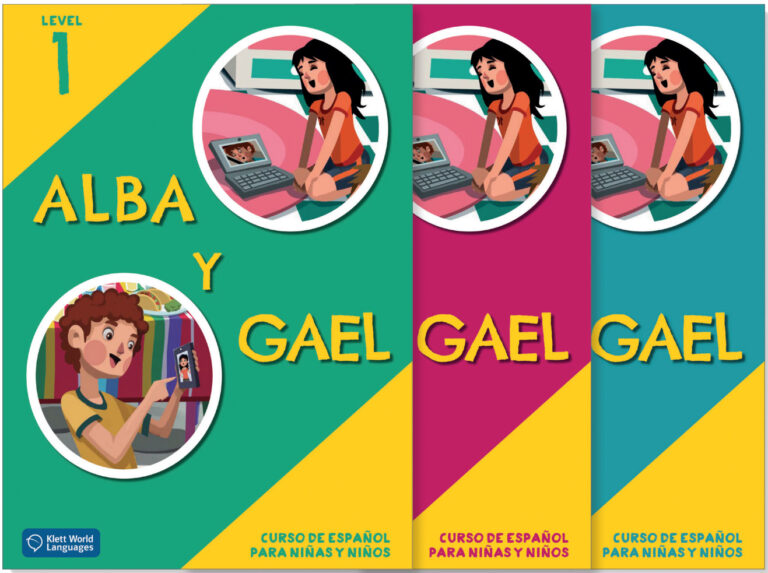
During her time at Daniels Run Elementary School, Carmen integrated ALBA Y GAEL into her K–6 Spanish curriculum through weekly 60-minute sessions. This sustained classroom implementation later informed her role as pedagogical author of ALBA Y GAEL INICIAL, a collection developed, tested, and refined through authentic classroom practice.

Daniels Run Elementary School is a public elementary school serving students in grades K–6 in Fairfax County, Virginia. Spanish is offered through a FLES (Foreign Language in the Elementary School) model, with limited instructional time and a strong need for engaging, well-structured materials that maximize meaningful language exposure.
Within this context, Carmen implemented ALBA Y GAEL as part of her weekly instruction, using its story-based units to bring coherence, continuity, and purpose to Spanish learning. The program’s narrative structure and cultural content enabled her to integrate TPRS strategies, drama activities, and interactive tasks, making Spanish both accessible and engaging for young learners.
The Challenge
Prior to adopting ALBA Y GAEL, the FLES curriculum used at the school did not include a textbook and lacked coherence, structure, and student appeal. According to Carmen, the materials were disengaging, outdated, and disconnected from students’ interests.
Lessons typically began with long lists of isolated vocabulary, presented without meaningful context or communicative purpose. Activities were repetitive and uncreative, focusing on memorization rather than interaction or real language use. As a result, students struggled to stay engaged, leading to behavior issues and low retention.
“One of the biggest challenges,” Carmen explains, “was that the curriculum didn’t give students a reason to care. Vocabulary was taught in isolation, without stories, without structure, and without a clear connection to real life.”
Even when projects were proposed, they lacked sufficient scaffolding. For example, a fourth-grade “weather reporter” project introduced an interesting concept but failed to provide the linguistic and instructional support students needed to engage confidently. Teachers were expected to compensate by creating their own resources, leading to inconsistency and an increased workload.
This lack of engagement directly impacted learning outcomes. Student proficiency levels remained stagnant, and students showed limited progress in communicative ability, confidence, and cultural understanding.

“Teachers were expected to create their own resources to make lessons engaging, which led to inconsistency and a lot of extra work.”
Carmen Reyes
The Solution
Carmen adopted ALBA Y GAEL to address these challenges, drawn by its coherent structure, storytelling approach, and focus on meaningful communication. Unlike the previous materials, ALBA Y GAEL introduces language in context through relatable characters, visuals, and narratives that evolve across units.
“Vocabulary was no longer something students memorize,” Carmen notes.“It’s something they live through the story.”
Thematic units build on one another, helping students retain language and understand how ideas connect. This coherence made lessons easier to follow and more meaningful, even within the limited instructional time of a FLES program.
Project-Based Learning with a Clear Purpose
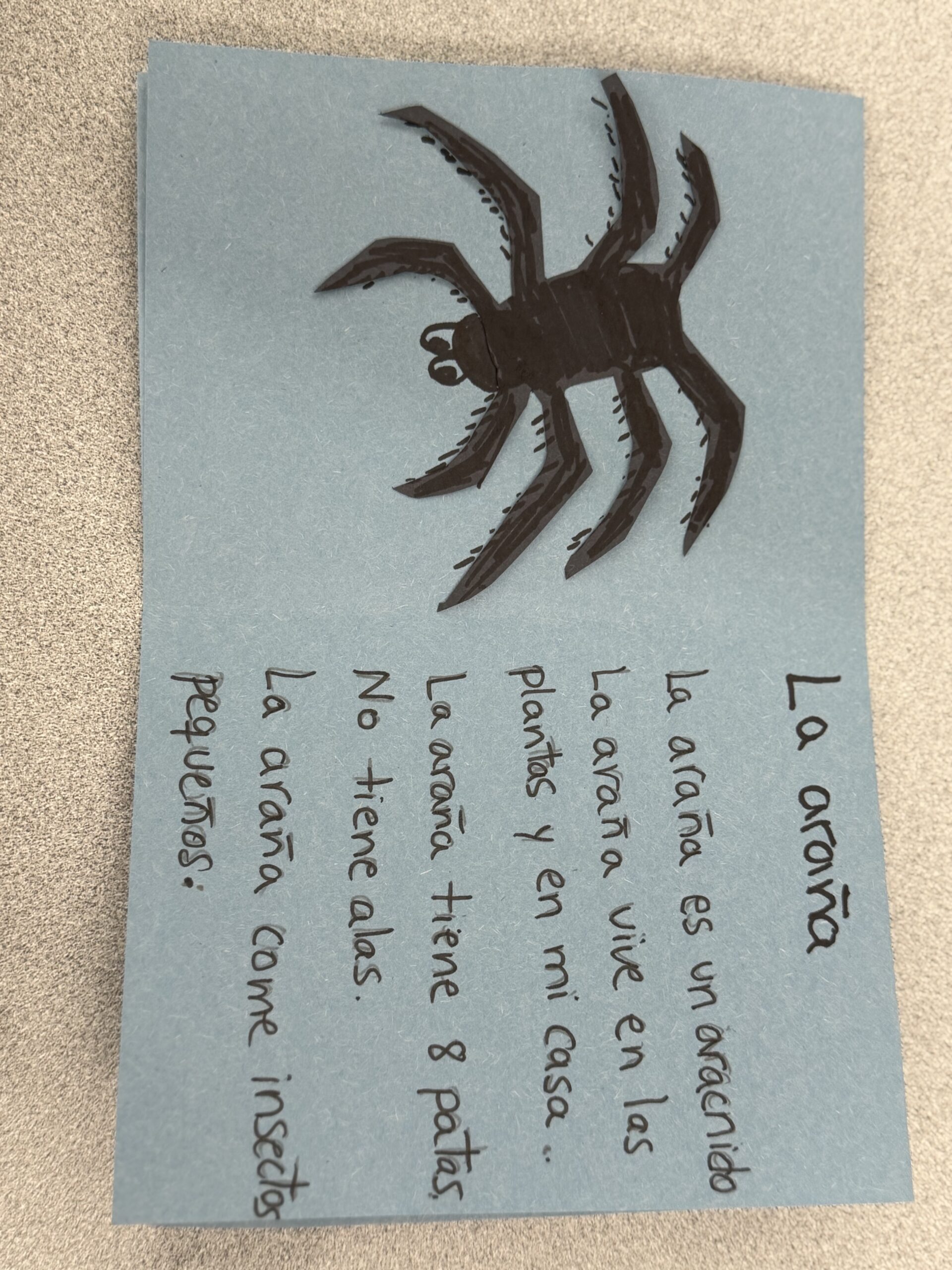
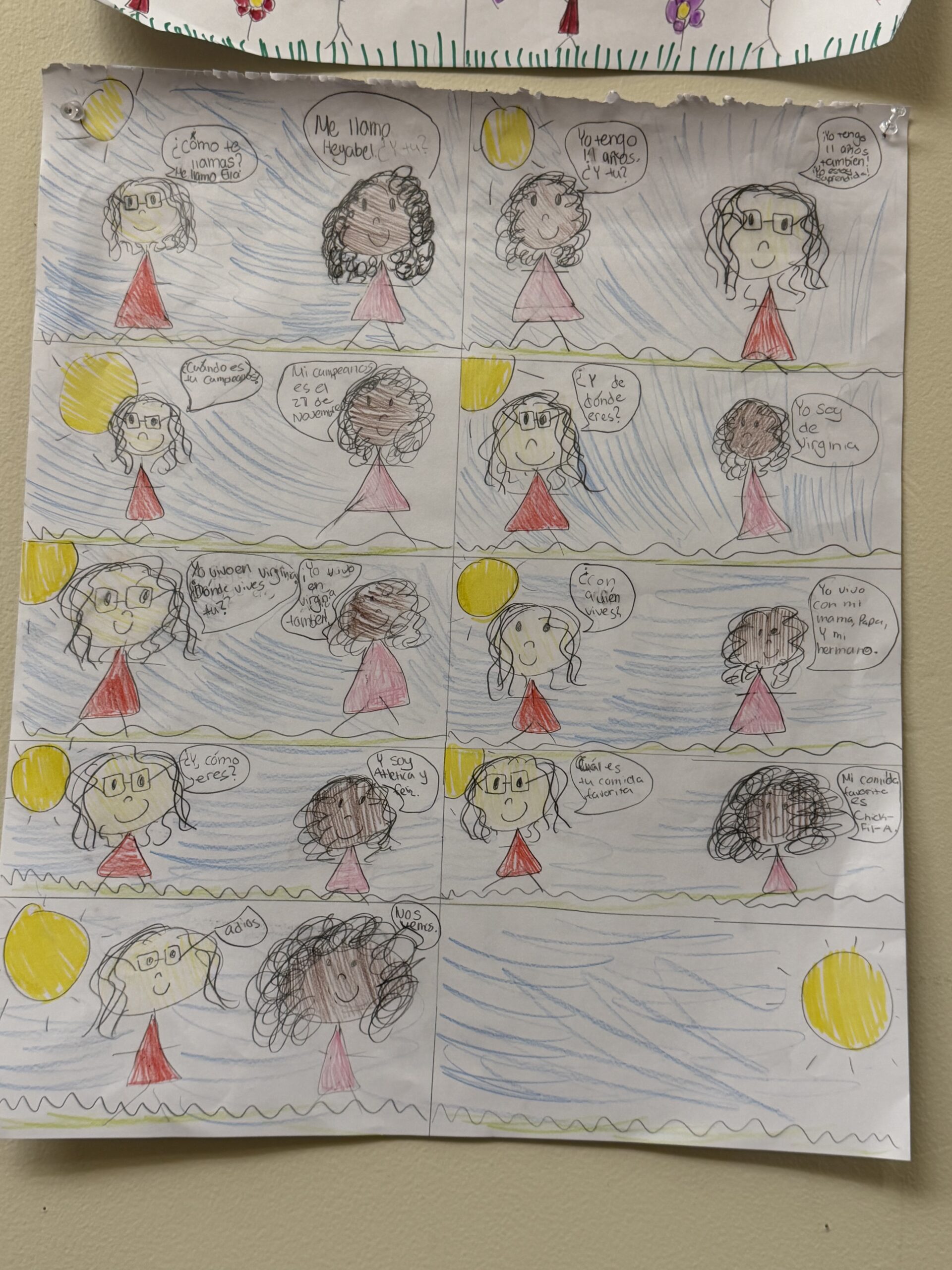
Each unit in ALBA Y GAEL culminates in a hands-on project that gives students a reason to use Spanish. From creating mini-books to role-playing everyday situations or presenting cultural topics, students apply language in ways that feel authentic and achievable.
Instead of completing disconnected exercises, students use Spanish to communicate ideas, tell stories, and express themselves creatively. This approach helped bridge the gap between classroom learning and real-world language use, increasing both motivation and confidence.
Increased Engagement and Confidence
After implementing ALBA Y GAEL, Carmen observed a noticeable transformation in student engagement. Students looked forward to Spanish class, participated more actively, and developed an emotional connection to the characters and storylines.
“They cared about what happened next,” she explains.“That emotional investment changed everything.”
Students demonstrated clear growth in vocabulary acquisition, listening comprehension, and speaking confidence. Many began taking risks with spontaneous speech and interpersonal communication, an essential step toward real proficiency.
From Scaffolding to Independent Language Use
One of the most significant shifts Carmen observed was in students’ ability to express themselves independently. Previously, students relied heavily on sentence frames to produce language. While helpful, these structures often limited originality.
“With ALBA Y GAEL,” Carmen explains, “students had the support they needed, but also the freedom to create. Some students started to write short paragraphs using their own ideas.”
This transition from guided production to independent language use marked a major step forward in both confidence and proficiency.
Measurable Impact
Classroom-based pre- and post-assessments revealed substantial gains after adopting ALBA Y GAEL:
- 25% increase in listening comprehension
- 30% improvement in vocabulary recognition
- 20% increase in speaking fluency, measured using ACTFL-aligned rubrics
Participation also increased significantly, with over 85% of students regularly volunteering to speak or perform in Spanish, compared to approximately 60% before implementation. Engagement surveys showed that 92% of students felt more interested and invested in Spanish class.
"Vocabulary was no longer something students memorize — it was something they lived through the story. The characters and narratives created an emotional connection. When students care about what happens next, engagement changes completely."
Carmen Reyes
-

- Student-created products developed from Alba y Gael projects
-
- Student-created products developed from Alba y Gael projects
Impact on Students and Learning Outcomes
Reflecting on the experience, Carmen emphasizes that ALBA Y GAEL did more than replace materials; it transformed the learning environment.
“The program made Spanish meaningful,” she explains.“It reduced teacher burden, increased student engagement, and allowed language learning to feel natural, creative, and purposeful.”
By shifting from isolated vocabulary instruction to storytelling, projects, and performance-based learning, ALBA Y GAEL enabled students to develop confidence, cultural awareness, and real communicative skills, laying a strong foundation for continued language learning.
“The program reduced teacher burden while making Spanish more meaningful, creative, and purposeful for students.”
Carmen Reyes
Learn more about the ALBA Y GAEL textbook series by visiting the link below.