Home / Case Studies / REPORTEROS
Reframing Language Learning Through Real-World Communication with REPORTEROS
Introduction
The Langley School in McLean, Virginia, transformed its Spanish program from grammar-focused memorization to dynamic, project-based learning by adopting REPORTEROS. Instructor Carmen Reyes reports remarkable improvements in student engagement, creative expression, and authentic communicative competence through the program’s real-world approach, authentic materials, and interdisciplinary connections.
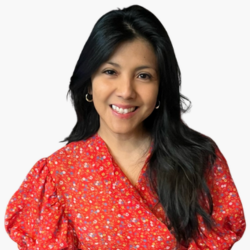
Carmen Reyes is a Spanish teacher, distinguished presenter, and author of the pedagogical book ALBA Y GAEL INICIAL.
She currently teaches at The Langley School in McLean, VA.
Carmen was nominated for Outstanding K–6 Teacher in 2023 while teaching at Daniels Run Elementary School and was named GWATFL Teacher of the Year 2026.
She holds a Master’s degree in the Teaching and Learning of the Spanish Language and its Culture from Universidad de Granada and has shared her expertise at conferences such as ACTFL.
She has been using REPORTEROS four times a week for 50 minutes each session since the beginning of this school year.

The Langley School is an independent, coeducational school in McLean, VA, serving preschool through grade 8. Founded in 1942, the school emphasizes inquiry-based learning and social-emotional development to prepare students for meaningful contributions in a rapidly changing world.
The Spanish program emphasizes communicative competence and intercultural understanding through real-world application, equipping students to become global citizens prepared to navigate the interconnected world with confidence and creativity.
The Challenge
Although Carmen’s students were highly motivated to learn Spanish, the materials previously used in her classes were not sufficient to meet their full learning needs or support authentic language development.
These materials created significant barriers to authentic language learning. Unlike many classrooms, students did not use textbooks; instead, they relied on traditional, grammar-based materials that focused primarily on formal, scripted dialogues that lacked relevance to students’ real-life experiences.
“The content was too abstract and disconnected from the dynamic, conversational Spanish that students would encounter outside the classroom,” Carmen explains.“This made it difficult for students to see the practical application of their learning.”
The structure created additional challenges. Materials began with vocabulary lists, followed by exercises without context. Units weren’t connected to one another, and students completed packages with English instructions before moving to the next unit without practical application. The materials emphasized grammar drills and memorization over real-life conversations, with limited opportunities for authentic, spontaneous communication—critical elements for developing fluency. Project-based learning was absent.
The impact on student engagement was significant. Students felt the materials were too focused on rote memorization and repetition, leaving little room for creative or critical thinking. Exercises felt like tasks to get through rather than meaningful learning opportunities. By year’s end, students felt they hadn’t learned much Spanish and lacked confidence, having forgotten so much by the next school year.
Carmen recognized that fundamental change was needed.“It was essential to find new materials that connected with students’ day-to-day lives and future professional realities, because language learning needs to reflect how people actually communicate in the world. By using resources that students can relate to, such as news reports and cultural topics, they are more engaged and better equipped to apply their language skills. This approach leads to improved motivation, enhanced participation, and better learning outcomes.”
"The previous materials were too focused on rote memorization and repetition of new vocabulary and sentence structures. Students didn't have the opportunity to use their creativity in connection with Spanish."
Carmen Reyes
The Solution
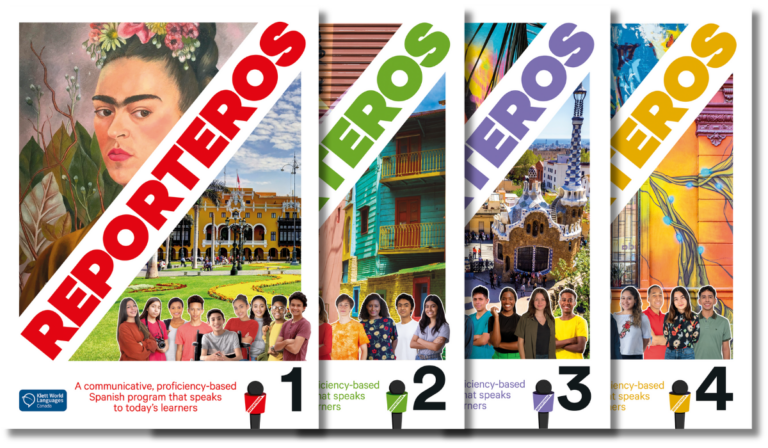
To effectively address these challenges, Carmen adopted REPORTEROS, a comprehensive Spanish program that engages students through authentic communication and project-based learning. The decision was underpinned by several key features that promised to transform the language learning experience in her classroom.
Active, Communicative Learning
Carmen explains how REPORTEROS transformed her approach: “REPORTEROS addressed the challenges of rote memorization and lack of creativity by incorporating active, communicative, and practical learning experiences. Unlike previous materials, which focused on repetitive exercises, REPORTEROS encourages students to take an active role by creating real-life reports and projects on current, relevant topics, while also fostering creativity. This approach allowed students to engage with the language in meaningful ways, promoting creativity, critical thinking, and the practical application of Spanish in everyday situations.”
Unlike previous materials that presented vocabulary lists without context, REPORTEROS offers authentic readings featuring real characters and vocabulary in context. This makes the material more relevant and engaging, with updated topics that capture students’ interest.
Project-Based Approach Connects Learning to Real Life
The project-based approach involves students creating real-life reports about their communities, experiences, and personal interests. Carmen describes the impact: “This approach encourages students to engage in authentic communication, as they must use Spanish to share their perspectives and interact with the world around them. By working on projects that relate to their own lives, students develop language skills in a practical, communicative manner, which enhances their ability to use Spanish confidently in authentic contexts.”
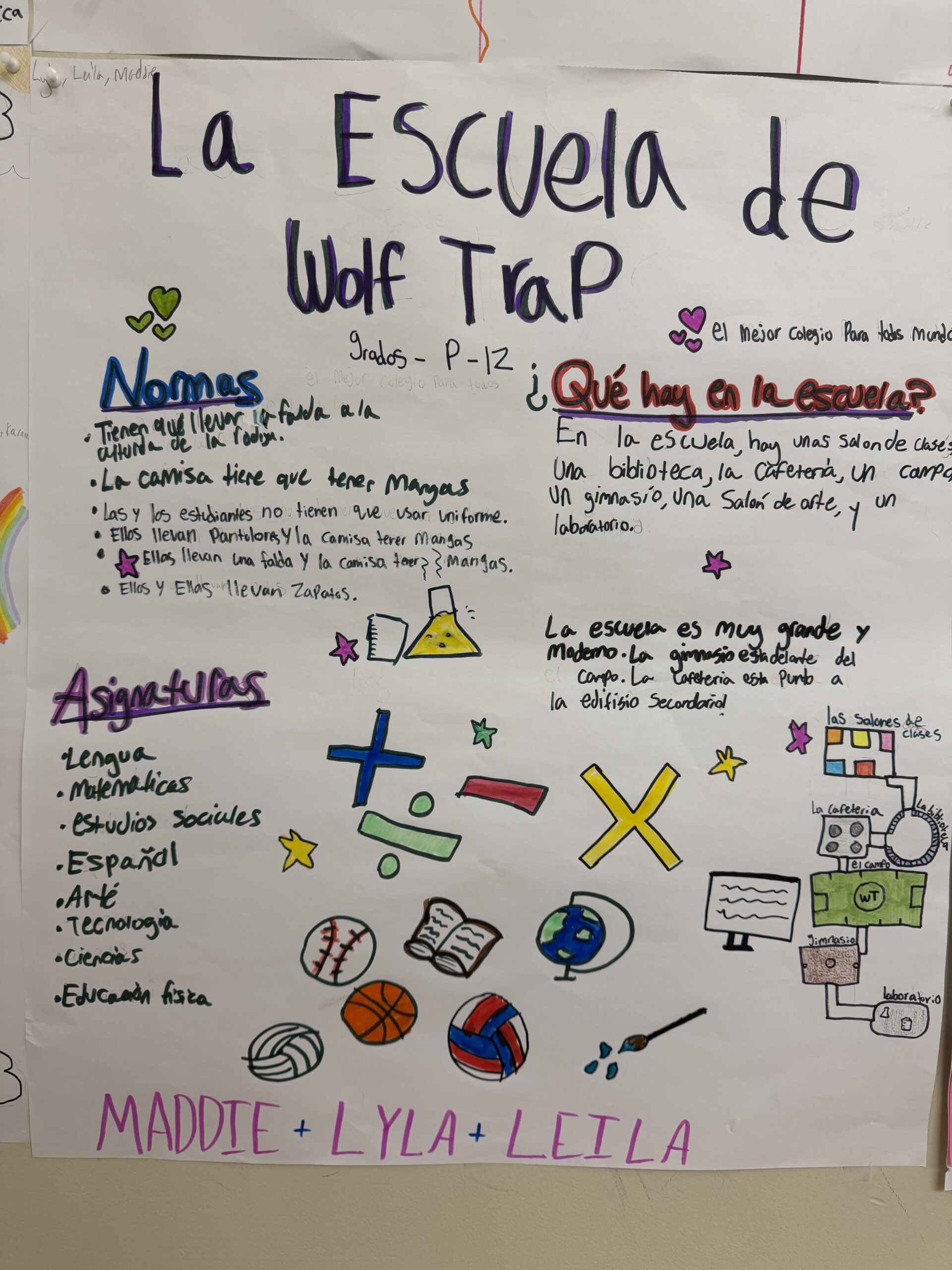
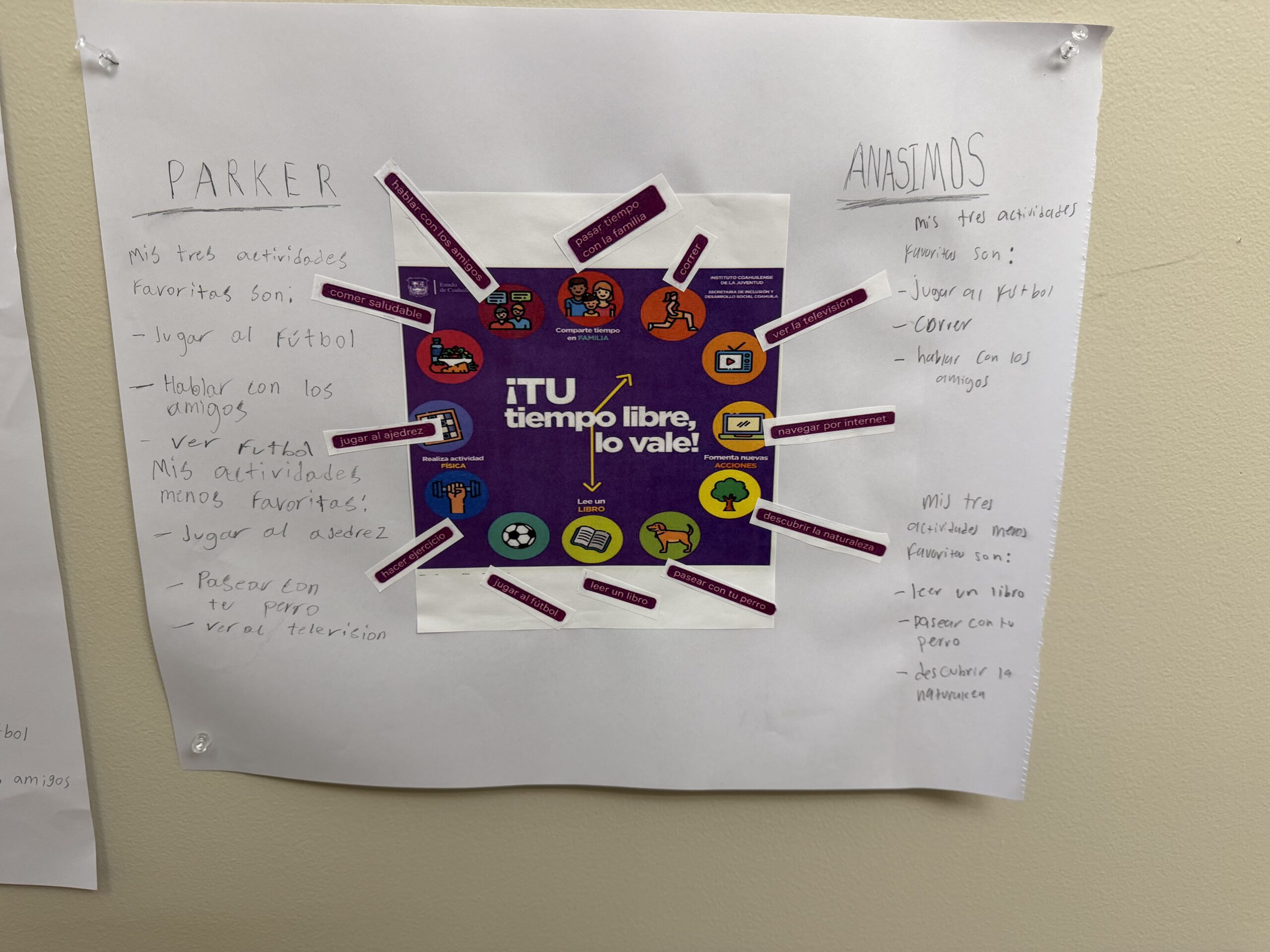
Students develop digital presentations, posters, and reports on their communities and present them in Spanish, improving their speaking and writing skills while boosting confidence.
Students expressed their enthusiasm:
“I love how our projects let me use Spanish in real-life situations! It feels like I’m actually learning how to communicate, not just memorize words.”
“The project-based activities make learning Spanish fun and engaging.”
Interdisciplinary Learning Bridges the Classroom and the Real World
Carmen explains: “The program allows students to explore diverse communities, both within the Spanish-speaking world and their own, while learning through other disciplines like math, history, science, and art. This interdisciplinary approach helps students see the relevance of Spanish in various contexts and apply their language skills beyond the classroom.”
Cultural Dimension and Digital Platform
Carmen also highlights the strong cultural dimension that REPORTEROS brings to the classroom, as well as the added value of its digital platform. She explains, “REPORTEROS provides a strong cultural dimension and contextualizes learning in a very accessible way, both in the textbook and through the digital platform, connecting Spanish to the city, the school, and the community.” According to Carmen, presenting real, relevant people from the Spanish-speaking world helps humanize the language-learning experience and move beyond abstract grammar toward meaningful communication.
Through both print and digital resources, REPORTEROS connects Spanish to authentic contexts, allowing students to see how the language functions in everyday life. Carmen notes that this approach “promotes cultural curiosity and empathy, helping students understand and value cultural diversity while developing communicative competence in real-life situations.”
The KWL Hub platform further supports this process by providing a clear, coherent structure for teachers and students, along with authentic, visually engaging materials that facilitate comprehension. Carmen adds that the digital environment “supports differentiation and learning at different paces,” ensuring that all students can access the content and progress with confidence.
Accessible Implementation
Implementation was smooth from the beginning of the school year. Starting with the preliminary unit allowed time to build a solid foundation. The program offered differentiated instruction and accessible materials with simplified instructions and clear fonts, ensuring all students could participate fully. The digital learning environment enhanced the overall experience, and the program was well-received by both teachers and students.
"This approach allowed students to engage with the language in meaningful ways, promoting creativity, critical thinking, and the practical application of Spanish in everyday situations."
Carmen Reyes
-

- Student-created products developed from Reporteros projects
-

- Student-created products developed from Reporteros projects
Impact on Students and Learning Outcomes
Carmen reflects on the transformation: “After implementing REPORTEROS, I observed a significant boost in student engagement and learning outcomes. Students are highly motivated and actively participate in lessons, thanks to the program’s dynamic, enjoyable, and meaningful learning experiences. The communicative and project-based approach encourages students to apply Spanish in practical, real-world contexts, leading to notable improvements in language proficiency and increased confidence. Furthermore, the program’s use of authentic materials and culturally relevant content has sparked a deeper interest in learning Spanish.”
Students consistently express increased confidence:
“I feel more confident speaking Spanish now. The projects have helped me practice in a way that actually makes sense, and I can see how I’ll use Spanish in my everyday life.”
This shift to engaging, practical resources has increased student participation and improved language proficiency. Students are now more confident using the language both in and out of class, moving from passive memorization to active, confident communication.
"Students are highly motivated and actively participate in lessons, thanks to the program's dynamic, enjoyable, and meaningful learning experiences. The program's use of authentic materials has sparked a deeper interest in learning Spanish."
Carmen Reyes
Learn more about the REPORTEROS textbook series by visiting the link below.